
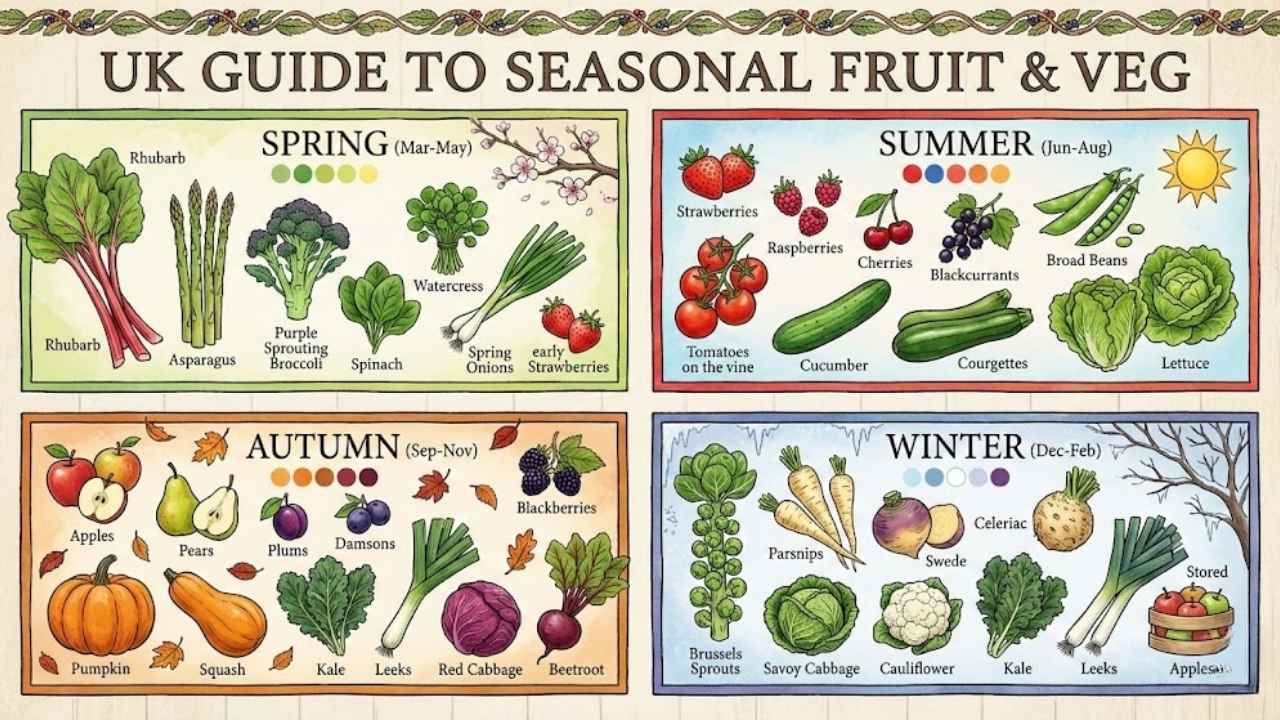
Eating seasonal fruit and vegetables is a simple way to enjoy fresher taste, better nutrition, and lower prices. When produce grows naturally in its proper season, it develops richer flavour and reaches your plate faster. Many people in the UK choose seasonal food because it feels healthier and supports local farmers at the same time.
This easy guide helps you understand what fruits and vegetables are in season right now and how you can use them in everyday meals. Whether you cook at home or shop at local markets, knowing what’s fresh makes your choices smarter, tastier, and more sustainable.
What’s in Season Right Now? A UK Guide to Seasonal Fruit & Veg
Eating seasonal food is one of the easiest ways to enjoy fresh taste, better nutrition, and lower prices. When fruit and vegetables grow naturally in their proper season, they develop richer flavour and need fewer chemicals and less storage time. Many people in the UK now choose seasonal produce because it supports local farmers and reduces environmental impact.
If you live in the UK or plan to visit, knowing what’s in season helps you shop smarter and cook tastier meals. This simple guide explains what fruits and vegetables you can find right now and how to use them in your kitchen.
Why Seasonal Eating Matters
Seasonal food travels shorter distances from farm to table. This means it stays fresher and keeps more nutrients. You also spend less money because local produce costs less to transport and store.
When you buy seasonal fruit and veg, you help British farmers and reduce food waste. You also enjoy natural flavours that frozen or imported food cannot match. Fresh strawberries in summer or warm pumpkin soup in autumn always taste better because they belong to that season.
Understanding the UK Growing Seasons
The UK has four clear seasons: spring, summer, autumn, and winter. Each season brings different crops.

- Spring offers light greens and tender vegetables.
- Summer gives juicy fruits and colourful salads.
- Autumn brings root vegetables and harvest fruits.
- Winter focuses on hardy greens and stored produce.
Let’s explore what you can find right now across these seasons.
Spring Picks: Fresh and Light Choices
Spring marks the return of green vegetables after cold winter months. Farmers harvest young and tender produce during this time.
Common spring vegetables include asparagus, peas, spring onions, spinach, radishes, and lettuce. You will also find new potatoes and carrots.
These foods taste crisp and fresh. You can steam them lightly, toss them in salads, or stir-fry them with herbs. Asparagus with lemon butter or pea soup makes a perfect spring meal.
Spring fruits include rhubarb and early strawberries. Rhubarb works well in pies and crumbles.
Summer Stars: Sweet and Colourful Produce
Summer offers the widest variety of fruits and vegetables. Warm sunshine helps crops grow fast and develop natural sweetness.

Popular summer fruits include strawberries, raspberries, blueberries, cherries, plums, and peaches. These fruits taste amazing on their own or in smoothies and desserts.
Vegetables such as tomatoes, cucumbers, courgettes, peppers, sweetcorn, green beans, and aubergines also reach their best quality in summer.
You can grill, roast, or eat them raw. Think fresh salads, pasta dishes, or BBQ sides. A simple tomato and cucumber salad often tastes better than complex recipes.
Autumn Harvest: Warm and Comforting Foods
As the weather cools, autumn brings earthy and filling produce. This season suits soups, stews, and baked dishes.
Root vegetables dominate this period. You will see carrots, parsnips, beetroot, pumpkins, squash, and sweet potatoes everywhere. Apples and pears also appear in large quantities.
These foods store well and provide energy for colder days. Roast vegetables with herbs or bake apple pies for a classic autumn flavour. Autumn also offers mushrooms and leeks, which add depth to many dishes.

Winter Essentials: Hardy and Nutritious Options
Winter may seem limited, but it still offers many healthy choices. Farmers grow strong vegetables that survive cold temperatures.
Cabbage, kale, Brussels sprouts, cauliflower, and broccoli remain widely available. These vegetables contain vitamins that support your immune system. Root vegetables such as turnips and swedes also stay in season. You can mash, roast, or add them to stews.
Citrus fruits like oranges and clementines often arrive from nearby European regions during winter, giving you a boost of vitamin C when you need it most.
Seasonal Fruits to Watch For Each Month
If you want a quick guide, here are some examples:
- January–March: cabbage, leeks, kale, apples, pears
- April–June: asparagus, spinach, rhubarb, strawberries
- July–September: tomatoes, courgettes, berries, cherries, beans
- October–December: pumpkins, squash, parsnips, apples, sprouts
This list helps you plan meals and grocery shopping more easily.
How to Shop for Seasonal Produce
Local markets often sell the freshest seasonal food. Farmers harvest these items recently, so they taste better than supermarket imports.

Check labels and look for “British grown” or “locally sourced.” You can also ask shopkeepers what arrived fresh that week.
Seasonal produce usually costs less because farmers grow it in large amounts. If prices seem high, the item may not be in season. Try meal planning around what you find instead of searching for specific imported vegetables.
Easy Cooking Tips for Maximum Flavour
Seasonal produce already tastes great, so keep cooking simple. You don’t need heavy sauces or long recipes.
Steam or roast vegetables to keep their natural flavour. Add olive oil, salt, pepper, and herbs. That often works best.
Fresh fruits shine in salads, smoothies, or yoghurt bowls. You can also freeze extra produce to use later.
Avoid overcooking. Quick methods help keep colour, texture, and nutrients intact.

Benefits for Health and the Planet
Seasonal eating supports both your body and the environment. Fresh produce contains more vitamins and minerals because it spends less time in storage.
Local food also reduces transport emissions. Fewer trucks and planes mean less pollution. Packaging waste also decreases when you buy from markets or farm shops.
By choosing seasonal food, you protect the planet while improving your meals. It’s a simple change with big benefits.
Seasonal Eating for a Global Audience
Even if you live outside the UK, this idea still applies. Every country has its own growing seasons. When you follow your local calendar, you get the same benefits: better taste, lower prices, and fresher food.
Use this UK guide as an example. Learn what grows naturally where you live and shop accordingly. Seasonal eating works everywhere.