
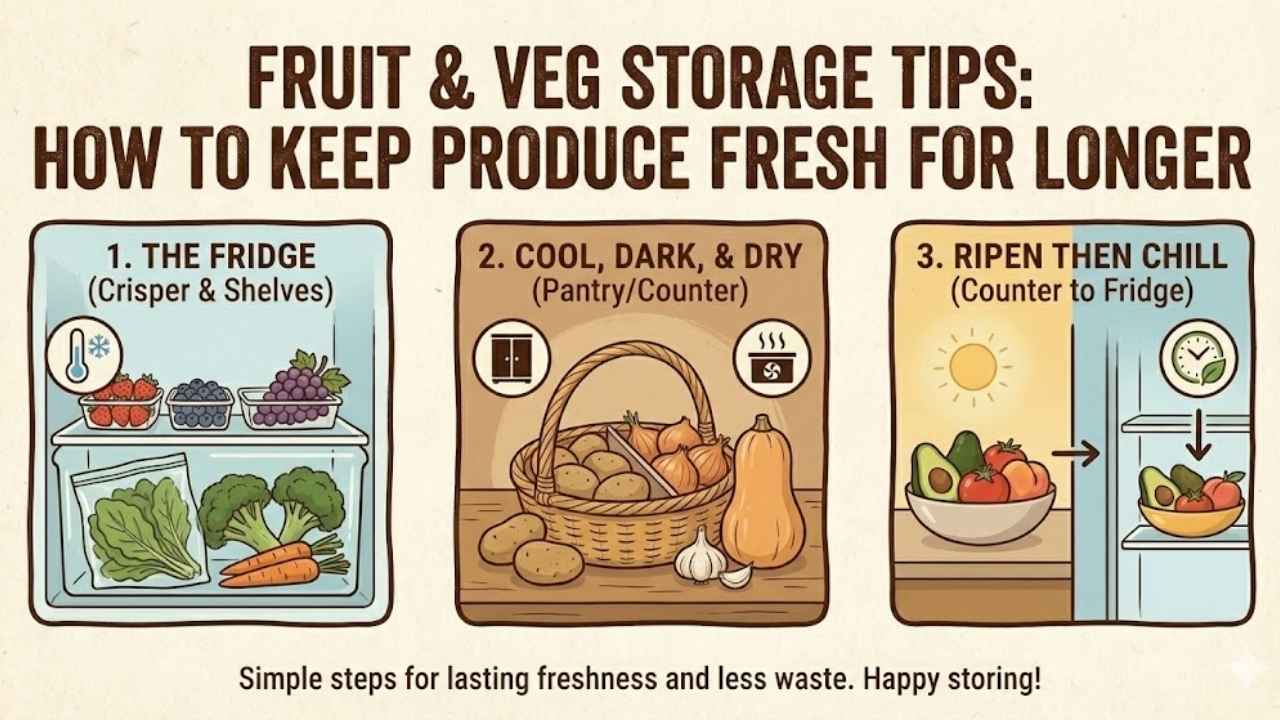
Keeping fruits and vegetables fresh for longer starts with simple storage habits. When you store produce properly, it keeps its taste, texture, and nutrients for many more days. Small steps like separating fruits from vegetables, avoiding extra moisture, and using your fridge correctly can make a big difference. These easy changes help reduce spoilage and save money.
You don’t need complicated tools or special methods to protect your groceries. Just plan your meals, organize your fridge, and use delicate items first. With the right care, your fresh produce stays crisp, flavourful, and ready to enjoy throughout the week.
Fruit & Veg Storage Tips: How to Keep Produce Fresh for Longer
Fresh fruits and vegetables bring colour, flavour, and nutrition to everyday meals, but they often spoil faster than we expect. Many people buy healthy produce with good intentions, only to find wilted greens or soft fruits a few days later. This not only wastes money but also leads to unnecessary food waste. The problem usually isn’t the quality of the food, but the way we store it at home.
The good news is that you can keep your produce fresh for much longer with a few simple storage habits. When you understand how temperature, moisture, and airflow affect fruits and vegetables, you can protect their taste and texture easily. Small changes in how you organize your kitchen or fridge can make a big difference and help you enjoy fresh food throughout the week.

Understand how fruits and vegetables behave
Fruits and vegetables continue to change even after harvest. Some fruits release a natural gas called ethylene, which helps them ripen, but this gas can also cause nearby vegetables to spoil faster. When everything sits together in one drawer, delicate items often soften or turn yellow much sooner than expected. This is why proper separation plays an important role in keeping food fresh.
By understanding this natural process, you can store produce more wisely. Keeping fruits and vegetables apart helps slow down ripening and prevents unnecessary spoilage. This small step alone can add several extra days to the life of your groceries and reduce waste without any extra effort.
Use your refrigerator the right way
Your refrigerator can protect freshness, but only if you use it correctly. Most vegetables prefer cool temperatures because cold air slows down moisture loss and bacterial growth. Items like carrots, broccoli, spinach, beans, and peppers stay crisp and fresh much longer when stored in the crisper drawer, where humidity remains balanced.

However, not everything belongs in the fridge. Potatoes, onions, garlic, and pumpkins prefer a cool and dry place outside. When stored in cold, damp spaces, they may change texture or start sprouting quickly. Knowing which foods need refrigeration and which do not helps maintain both taste and quality.
Avoid washing produce before storage
Many people wash fruits and vegetables as soon as they return from the market, thinking it will keep them clean and ready to use. While this sounds convenient, extra moisture can actually speed up spoilage. Water encourages mould and bacteria, especially on delicate produce like berries and leafy greens.
Instead, store everything dry and wash only before cooking or eating. If something looks dusty, gently wipe it with a cloth rather than rinsing it. This simple habit keeps moisture away and helps your produce stay fresh for several more days.

Store leafy greens with extra care
Leafy greens often spoil the fastest because they lose moisture quickly and become limp. Lettuce, spinach, coriander, and other greens need a little extra attention to stay crisp. Simply tossing them into the fridge without protection usually leads to soggy or wilted leaves within a short time.
A better method involves wrapping the greens loosely in paper towels and placing them inside an airtight container or bag. The paper towel absorbs extra moisture while still allowing some airflow. This balance helps maintain freshness and keeps your greens crunchy and ready for salads or cooking.
Give root vegetables space and airflow
Root vegetables like potatoes, onions, and sweet potatoes last longer when stored in cool, dark places with good ventilation. Light and trapped moisture can cause them to sprout or rot, which shortens their shelf life. Storing them in plastic bags often creates the wrong environment and leads to faster spoilage.

Instead, use baskets, mesh bags, or open containers that allow air to circulate freely. It also helps to store onions and potatoes separately because they release moisture and gases that affect each other. A little spacing goes a long way in keeping them fresh for weeks.
Handle cut and peeled produce properly
Once you cut fruits or vegetables, they lose their natural protection and spoil faster. Air exposure dries them out and changes their colour and flavour. This is why chopped produce left uncovered in the fridge often looks dull or stale after just a few hours.
To keep cut items fresh, store them in airtight containers and refrigerate them immediately. You can also sprinkle lemon juice on fruits like apples or pears to slow down browning. Proper storage keeps them tasting fresh and ready for quick meals or snacks.

Freeze extra produce to reduce waste
Sometimes you simply buy more than you can use in time. Instead of throwing away extra vegetables or fruits, freezing them offers a practical solution. Many items like peas, beans, spinach, berries, and chopped carrots freeze well and retain most of their nutrients.
By preparing and freezing produce in small portions, you always have ingredients ready for soups, smoothies, or stir fries. This not only reduces waste but also saves money and cooking time during busy days. Freezing acts like a backup plan for your groceries.
Keep your fridge organized and uncluttered
An overcrowded fridge blocks airflow and creates uneven cooling, which can cause food to spoil faster. When items get pushed to the back, you may forget about them until they go bad. Poor organization often leads to waste without you even realizing it.
Try arranging produce neatly and leaving small gaps for air to circulate. Place older items at the front so you use them first. A clean and organized fridge helps you see everything clearly and keeps your food fresh for longer periods.
Plan meals based on freshness
Smart storage works best when combined with simple meal planning. Use delicate foods like greens, herbs, and berries earlier in the week, and save sturdier vegetables like carrots, cabbage, or potatoes for later. This natural order helps you enjoy everything at its best quality.
Planning meals around what needs to be used first also reduces stress in the kitchen. You waste less food, cook more efficiently, and make better use of what you already have. This habit saves both time and money in the long run.